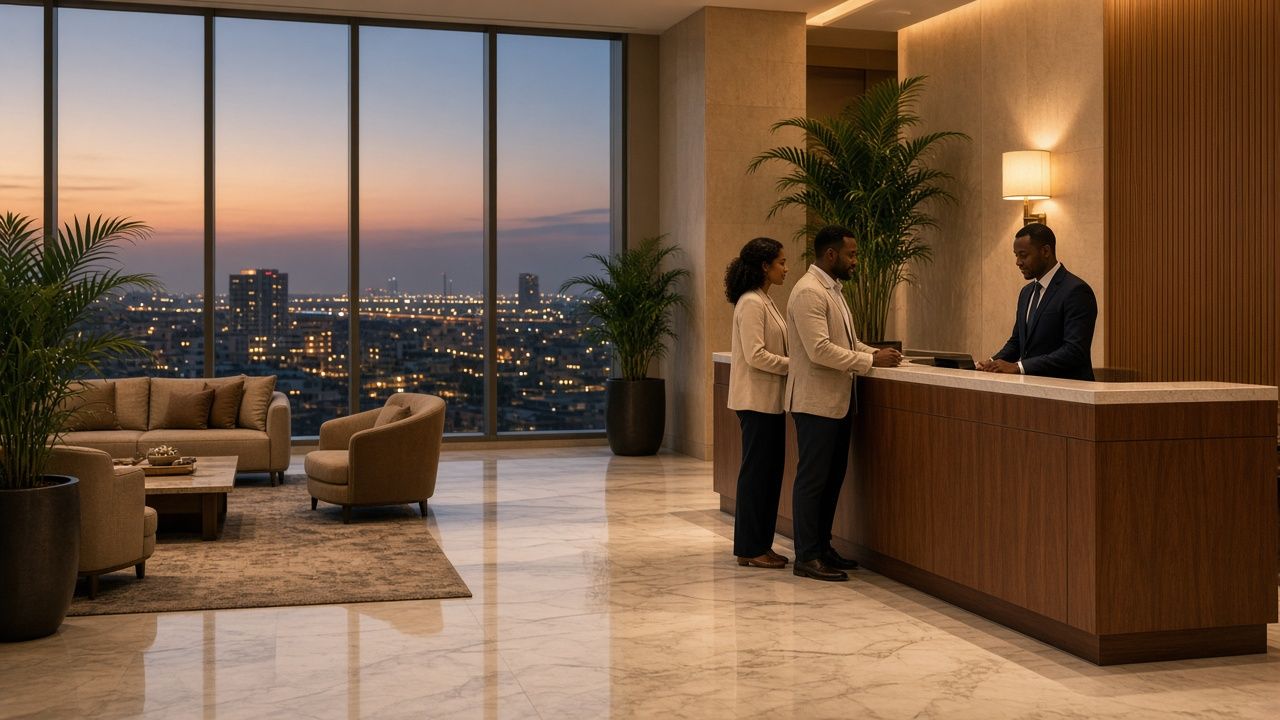
After sunset in Port Sudan, the residential complex run by Arabtic Group does not look like a construction site whose work is finished. The exterior lighting is even, the reception desk is open, and the maintenance log on the counter holds three notes in clear handwriting: a floor light, a lift noise, and a small leak in a services room. That ordinary scene is, in management’s view, the core of what it calls asset management: keeping a building a working place after the contractor picks up the plant and leaves.
Many local ownership contracts end, emotionally, at the handing over of the key. The buyer is glad, the developer moves to the next advertisement, and the building starts an early ageing from neglect. Arabtic writes in its profile that besides development, sales and rentals it offers complex management, operations and hospitality. The sentence is short. Applying it means shift times, cleaning and electrical suppliers, and a complaints protocol that does not vanish at the weekend.
Hospitality for us is not a carpet in the lobby. Hospitality is a resident finding someone to answer at eleven at night if the lift stops.
Rana Majzoub, operations and hospitality director
Rent and ownership under the same desk
The group offers ownership and rental options for residential and commercial units: suites, farms, rooms, villas and apartments. A mixed product forces mixed operations. A tenant needs a faster response; an owner needs a periodic report that protects an asset already paid for. Management decided not to split the two teams completely, so a rented unit is not treated with less care than a sold one. In practice a maintenance request travels the same system, and closing time is measured rather than the client’s status.
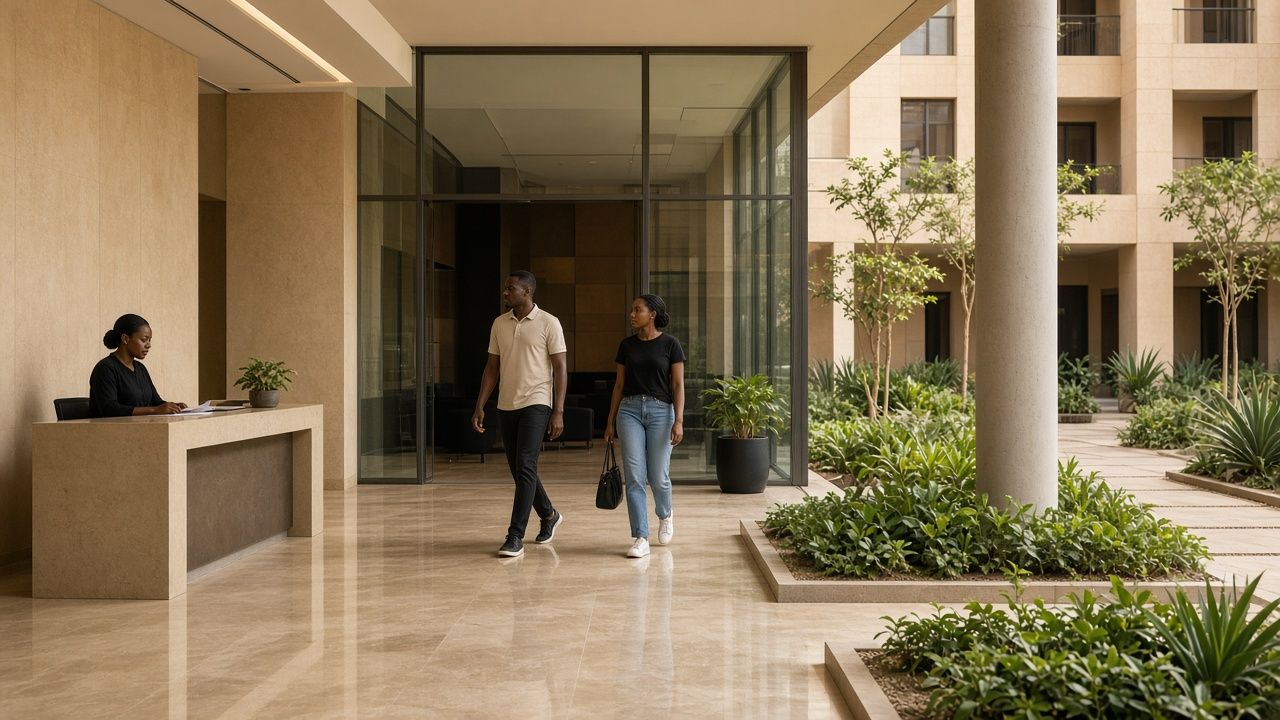
In Khartoum the rhythm is different. Density is higher, residents’ requests are more varied, and pressure on lifts and power is clearer. The Kafouri office can receive, in the same week, notes from a residential tower and from a commercial unit in a service complex. Coordination runs through a preventive maintenance timetable: filters, pumps, facades and internal gardens. Asset supervisor Yasser Ali says the most expensive repair is the one that is postponed. A pump replaced on schedule is cheaper than a basement flooded on a storm night.
Hospitality as a defence of value
Talk of luxury in Sudan’s property market is easy. The harder task is keeping a building clean, safe and lit twelve months after people move in. Hospitality is therefore treated here as a value-protection tool: an orderly reception that reduces disorder, common lighting that improves the sense of safety, and staff who know long-term residents without turning the place into a hotel that drives out the feeling of home. The balance is fine, and the group admits it is still being tuned in some of the newer complexes.
In the end, asset management is the least glossy and most honest test of a property company. A tower can win a photograph on opening day and lose its residents quietly within a year if complaints have no path. With offices in Khartoum Bahri and Port Sudan, and reception that the company says runs around the clock, Arabtic is trying to make operations part of the engineering product itself. If that holds, Al-Thuraya will not be judged by how many elevations shine, but by how many days the lift ran without a break.